

IDEAS doctoral researchers grow into interdisciplinary scientists—supported by structured training, cohort activities, and close supervision.
Profiles of the doctoral researchers

Anastasiia Derzhanskaia
Contact
Research project: Agentic Cancer Care
I am a PhD Researcher at the HIDA Research School IDEAS in Dresden, Germany, with strong research interests in agentic AI, multimodal foundation models, and medical image analysis. My doctoral work applies these technologies to prostate cancer treatment monitoring, aiming to safely tackle overdiagnosis and overtreatment. I built my foundation in medical imaging during my Data Science master's at Philipps-Universität Marburg, where I created AI pipelines to predict surgical interventions from longitudinal MRI data.
I also have deep practical expertise in large language models and retrieval-augmented generation (RAG). I applied this by co-developing an open-source conversational agent for student support and actively shared my knowledge through talks on LLM evaluation at the university's reading club.
Beyond research, I am passionate about using AI to solve socially significant problems. I co-founded AIKA, an award-winning startup simplifying complex bureaucratic onboarding with chatbots. Additionally, I co-organized the interdisciplinary, student-run AI-Lab, an initiative that won the 2025 State Teaching Award of Hesse.
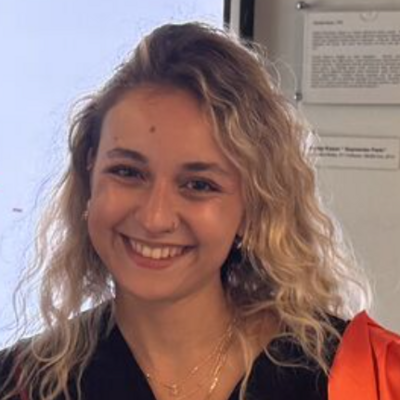
Beyza Kaya
Contact
Research project: Estimating LLM Biodiversity
Beyza Kaya is a PhD researcher at CASUS/HZDR working on the estimation of biodiversity in Large Language Models (LLMs). Her research explores an analogy between ecological systems and the knowledge represented by LLMs, using ecological estimation methods to infer unseen knowledge from observed model outputs. She holds an MSc in Artificial Intelligence and a double-major BSc in Computer Science and Industrial Engineering from Özyeğin University, Türkiye. Her previous research focused on applying machine learning and graph-based methods to computational biology, particularly chromatin structure prediction and spatio-temporal gene expression modeling.
Research topics: Large Language Models, LLM Biodiversity, Ecological Estimation, Machine Learning, Computational Biology
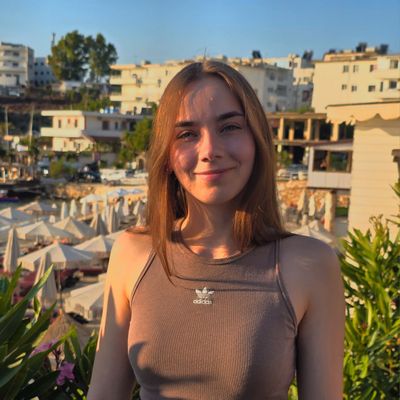
Deborah Weise
Contacts
Research project: Decoding Protein Darkmatter
Ever since high school, I have been interested in the natural sciences. Studying bioinformatics has allowed me to combine two very different fields of study: biology and computer science. My studies have sparked a particular interest in biological sequences, though I am also interested in algorithms, data science, and machine learning.
I am currently pursuing my PhD as part of the IDEAS project, where domain science meets data science. For my doctoral thesis, I am working with protein language models, which aim to understand the language of proteins. They are intended to help researchers gain insight into new sequences when homology-based approaches reach their limits.
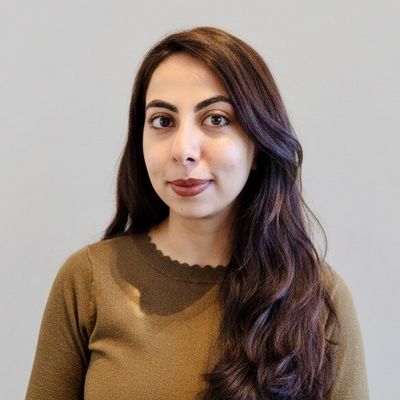
Maleeha Hassan
Contact
Research project: TrustSeg
Hi, I’m Maleeha. My doctoral research topic is "Trustworthy AI for Clinical Image Segmentation". I teach AI not only to identify important structures in medical images, but also to admit when it is unsure. By integrating uncertainty quantification methods with image segmentation models, I aim to make AI systems safer, more transparent, and more reliable for clinical use.
I hold a Master’s degree in Molecular Bioengineering from TU Dresden. Before beginning my PhD, I worked as an ML Engineer at HZDR where I gained experience turning machine learning concepts into practical solutions. Outside of research, I swap uncertainty quantification for two things I’m absolutely certain about: my love for good food and dance.
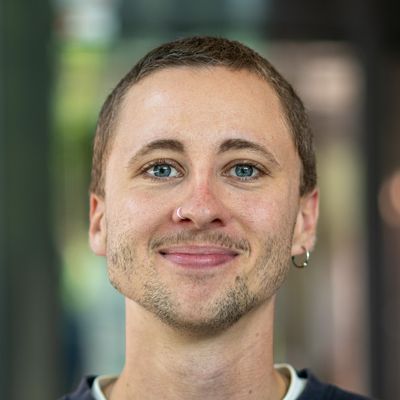
Marius Behret
Contact
Research project: Inequalities Climate Discourse
Marius is a PhD student in the IDEAS project “Inequalities in Climate Discourse” under the supervision of Prof. Dr. Mariana Madruga de Brito (UFZ), Prof. Dr. Manuel Burghardt (Leipzig University), Dr. Andreas Niekler (Leipzig University), and Dr. Taís Maria Nunes Carvalho. After his Bachelor’s in Communication and Media Studies (Leipzig University), he finished his Master’s in Digital Humanities (Leipzig University) and is now part of the UFZ research group “Computational Social Sciences for Extreme Events” and the Leipzig University research group “Computational Humanities”. During his studies his research focus was on text as data, discourse and framing analysis, and political topics related to social injustices. Within the Master’s in DH he acquired the methodological toolkit to analyze large amounts of text using NLP and ML methods.
Raghad J. AbuNasser
Contact
Research project: EXACT
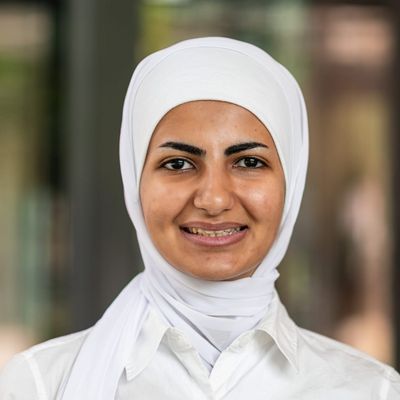
Raghad is a PhD researcher at the Helmholtz - UFZ and Leipzig University, working on the EXACT project under the supervision of Prof. Dr. Jana Schor, Prof. Dr. Peter Stadler, and Dr. Julia Westermayr. Her research focuses on explainable graph neural networks for credible chemical toxicity prediction. She holds an MSc in Health Informatics and a BSc in Pharmacy, and has authored several peer-reviewed papers at the intersection of ML and Pharmacy.
Research topics: Explainable Graph Neural Networks, Computational Toxicology, trustworthy AI under uncertainty, Cheminformatics
Sara Runkel
Contact
Research project: Climate Disasters
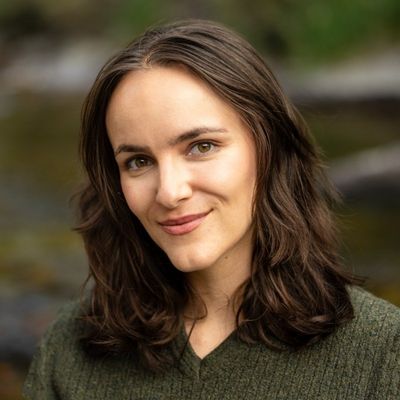
I am a doctoral researcher working jointly between the Department of Compound Environmental Risks (CER) at UFZ led by Dr. Jakob Zscheischler and the Institute for Earth System Science at University of Leipzig led by Prof. Dr. Miguel Mahecha. Building on my background in atmospheric observations, environmental epidemiology, and design, I study how disaster impacts are recorded and measured and how gaps in that data both reflect, and reinforce, climate injustice.