

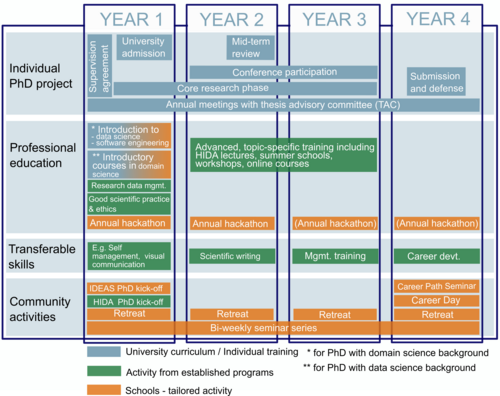
IDEAS combines ambitious PhD research with structured training. Doctoral researchers spend on average half a day per week on coursework and professional development and accumulate 12 credits. The thesis is designed for four years (main research in three, final year for writing and transferable skills).
Curriculum & community
Curriculum building blocks
- Research proposal/publications/thesis
- Project-specific methods training
- Good Scientific Practice & Ethics
- Research Data Management; transferable skills
Community & cohort
- Bi-weekly seminar (alternating Leipzig/Dresden)
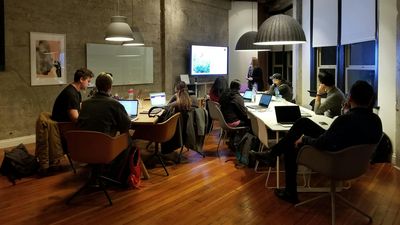
- annual 5-day hackathon (mandatory years 1–2)
- annual retreat/General Assembly
Supervision model
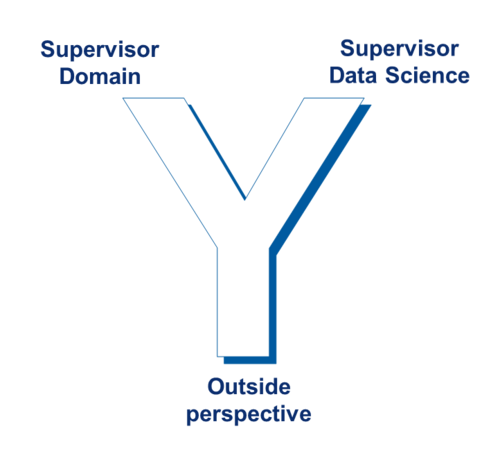
IDEAS follows the Y-supervision model: each project is jointly supervised by at least two PIs from different partner institutions—typically combining data science and domain expertise. In most projects, and pairing a Helmholtz Center with a university. Each doctoral researcher is supported by a Thesis Advisory Committee (TAC), which may include additional mentors and provides regular progress reviews.
How the recruitment process works
Recruitment follows a two-step model: first, IDEAS pre-selects high-quality PhD project proposals submitted by PIs; then a call is launched, candidates can apply to up to 3 projects and are evaluated and matched to projects based on excellence and mutual fit.
You are here: The project pre-selection has been completed and the call phase is closed. We are currently compiling the candidate ranking.
Process

1. Project pre-selection (completed)
1. Project pre-selection (completed)
Interdisciplinary PI teams submitted project proposals. The Steering Board selected a pool of topics for the call.

2. Call phase (completed)
2. Call phase (completed)
The selected project topics are published and applications are open. Choose your preferred projects and prepare your application documents.

3. Submit application (completed)
3. Submit application (completed)
You submit your application and choose your top 1-3 projects from the list below.

4. Candidate ranking (excellence-based)
4. Candidate ranking (excellence-based)
Candidates are evaluated and ranked based on scientific potential, achievements, and fit with the school and projects.

5. Interviews
5. Interviews
Top-ranked candidates are invited to online interviews. Interviews include a short presentation, discussion of a pre-assigned task, and a motivation/fit interview.

6. Final matching & hiring
6. Final matching & hiring
After interviews (and possible ranking adjustments), candidates choose projects in the order of ranking. A position is offered when both sides agree on the match.